
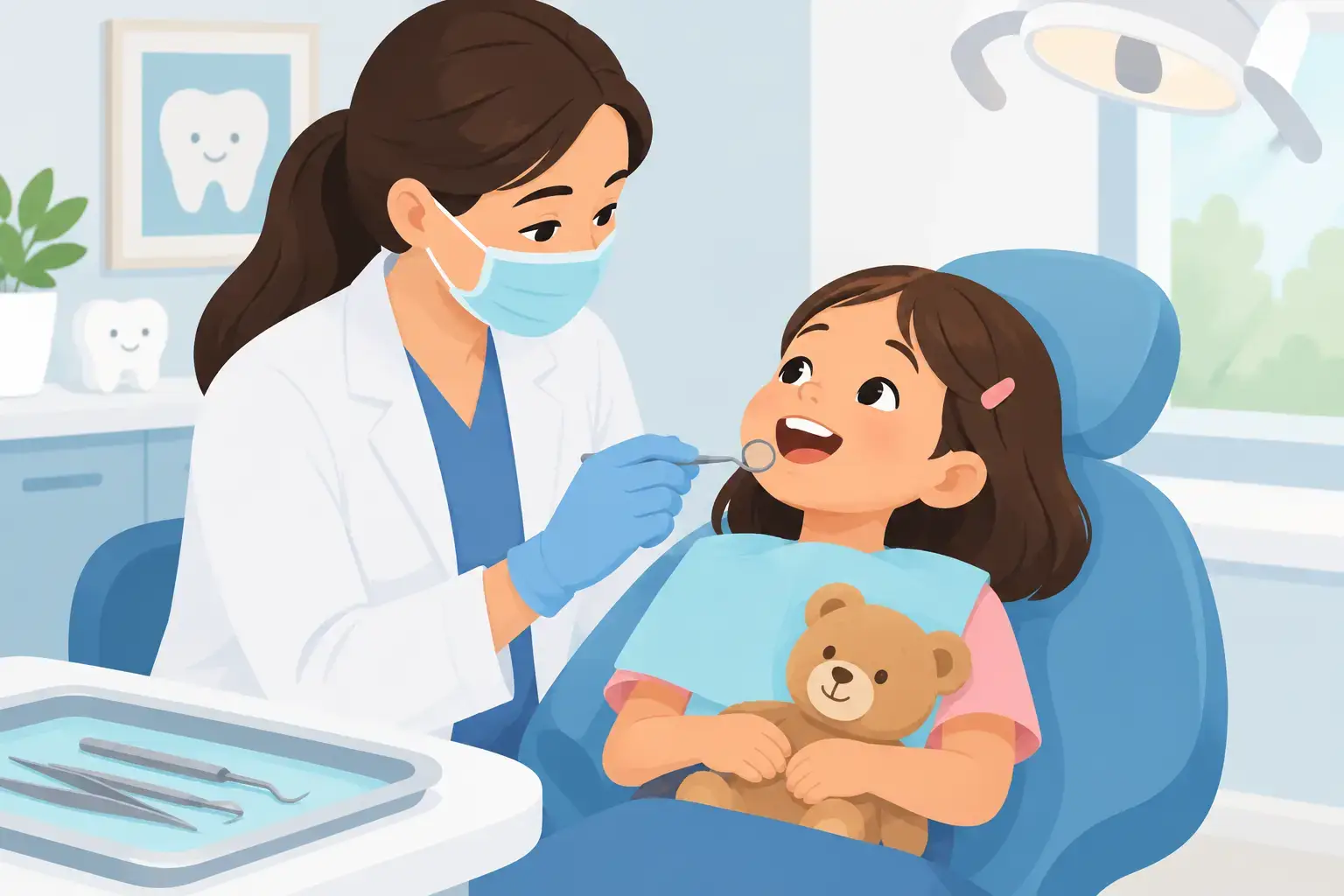
A child’s first tooth can arrive with little fanfare, but it marks the start of lifelong oral care. A positive children’s first dental visit is not about finding problems or making a child sit through a lengthy examination. It is a gentle introduction to a friendly place, familiar faces and the simple idea that looking after teeth is a normal part of growing up.
For many families, the best time to arrange that first appointment is when the first tooth appears, or by their first birthday. Starting early gives your dentist a useful baseline, allows parents to ask practical questions and helps a child become comfortable with the sights and sounds of the practice before treatment is ever likely to be needed.
Why the first appointment matters
Baby teeth may be temporary, but they have an important job. They help children eat, speak clearly and make space for adult teeth to develop in the right position. Early decay can cause discomfort, disrupted sleep and difficulty eating, while an early check can identify simple risks before they become bigger concerns.
Just as importantly, early visits build familiarity. Children who see dentistry as a routine part of family health are often more relaxed at later appointments. The aim is prevention, not perfection. A toddler who will only briefly open their mouth has still made a valuable start.
Each child develops differently, so there is no need to compare your child’s experience with anyone else’s. Some children stride in eagerly; others prefer to stay close to a parent, observe the room and take their time. Both responses are entirely normal.
What happens at a children’s first dental visit?
The appointment is usually short, calm and led at your child’s pace. Your dentist will begin by getting to know you both, often allowing your child to sit with a parent or carer if that feels more reassuring. There may be an opportunity to look at the chair, see how it moves and count teeth together.
If your child is happy to cooperate, the dentist will gently check their teeth, gums, bite and the way their jaws are developing. They may look for early signs of decay, check whether teeth are erupting as expected and assess factors that can influence oral health, such as prolonged bottle use, frequent sugary snacks, thumb sucking or dummy use.
The discussion is often the most useful part of the visit. You can ask about brushing, toothpaste, diet, teething, fluoride and any habits that concern you. If a full examination is not possible on the day, that is not a failure. For a very young or cautious child, simply walking into the surgery, meeting the team and having a positive interaction can be the right outcome.
X-rays are not routinely taken simply because it is a first visit. They are only considered where clinically appropriate, such as when a dentist needs more information that cannot be seen during an examination. Any recommendation should be explained clearly, with your child’s needs in mind.
The role of parents and carers
Parents set the tone more than they may realise. Children are quick to notice anxiety, even when it is well meant. Use calm, ordinary language: you are going to have your teeth counted and checked. Avoid describing the appointment as something frightening that they need to be brave enough to endure.
It can be tempting to promise there will be no treatment, but it is better not to make guarantees. Most first appointments are straightforward, yet honest reassurance gives the dental team space to respond appropriately if a concern is found. Phrases such as “the dentist will explain everything” and “we will take it one step at a time” are more helpful.
Preparing your child without making a fuss
A little preparation can make a meaningful difference, particularly for pre-school children. Choose an appointment time when your child is usually rested and settled, rather than close to naptime or after a busy nursery day. Bring a familiar comfort item if it helps, and allow enough time to arrive without rushing.
Keep your explanation short. You might play a simple game at home where you take turns opening wide and counting teeth, or read a reassuring story about visiting the dentist. There is no need to rehearse every detail. Too much build-up can make an ordinary appointment feel like a major event.
Try to avoid using words associated with pain, even in a reassuring context. Saying “it will not hurt” can introduce an idea that had not crossed a child’s mind. Dental teams use child-friendly language and a tell-show-do approach: explaining what will happen, demonstrating it in a non-threatening way and then proceeding only when the child is comfortable.
If your child has additional sensory, communication or medical needs, mention this when booking. A little advance information helps the team adapt the pace, environment and communication style. This may mean a quieter appointment time, a longer introductory visit or simply agreeing on the best ways to make your child feel secure.
Everyday habits that protect young smiles
The first visit is an ideal time to establish the small routines that prevent dental disease. Brush twice a day, including once before bed, using a fluoride toothpaste suitable for your child’s age. Until a child can brush effectively on their own, an adult should do the brushing or carefully supervise it. Most children need help for longer than parents expect, often until around the age of seven.
For children under three, a smear of toothpaste is generally enough. From age three, use a pea-sized amount. Encourage them to spit out excess toothpaste rather than rinse with water, which can wash away the protective fluoride left on the teeth. Your dentist can give individual advice if your child has a higher risk of decay or specific needs.
Food and drink choices matter not only in quantity but in frequency. Teeth are exposed to acid every time sugary food or drink is consumed, so repeated grazing can be more damaging than an occasional sweet treat eaten with a meal. Water and milk are the kindest everyday drinks for teeth. Fruit juice, squash, fizzy drinks and sweetened milk drinks are best kept occasional and not taken to bed.
Night-time bottles deserve particular attention. Once teeth have erupted, falling asleep with milk, formula or a sweet drink around the teeth can raise the risk of decay. If a bottle is needed for comfort, water is the safer option. Making changes can take time, and a dentist can help you find a realistic approach for your family rather than expecting everything to change overnight.
If your child is anxious or refuses to open their mouth
Do not worry if the first attempt feels incomplete. Forcing an examination can make future visits harder. A calm, respectful approach protects trust and allows confidence to grow gradually. The dental team may suggest a short return visit, where the goal is simply to repeat the positive parts of the experience.
Older children can also feel worried, particularly if they have had an uncomfortable dental experience elsewhere or are sensitive to unfamiliar sensations. Let the team know before the appointment. Modern family dentistry has many ways to support nervous patients, from careful communication and gentle techniques to taking treatment in manageable stages when needed.
When to arrange an appointment sooner
Routine early visits are valuable, but do not wait for a scheduled check-up if you notice a concern. Book promptly if your child has toothache, a swelling, a broken tooth, a dark spot or hole in a tooth, bleeding gums that persist, or an injury to the mouth. A knocked, chipped or displaced baby tooth needs professional advice, even if your child seems comfortable afterwards.
Early attention is usually simpler and kinder than waiting for symptoms to worsen. It also gives you clear guidance on what to do at home and whether any monitoring or treatment is needed.
At Avalon Oral Care Centre, our family-focused approach is centred on helping children feel safe, heard and cared for from their earliest visit. Bring your questions, bring their favourite toy if needed, and let the appointment be a small, reassuring step towards a healthy smile that feels naturally theirs.
